Grading5 min read
Centring, edges, corners, surface: the four criteria that decide a 10
How a grading company measures centring, edges, corners and surface, why vintage rarely gets a 10, and how to do a pre-grading at home.
The Pokechrono editorial teamPublished 1 October 2026
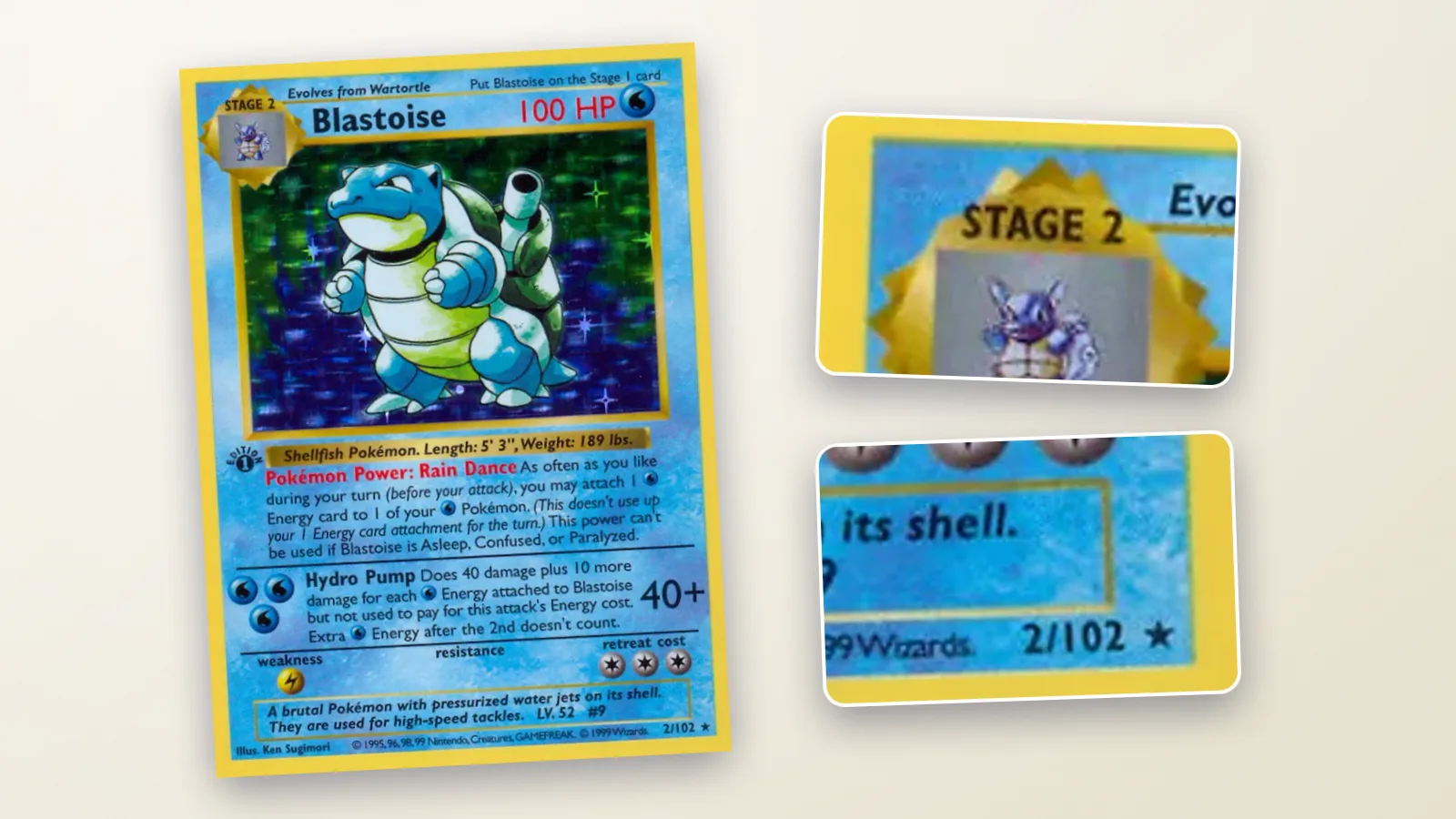
The grade of a Pokémon card is the sum of four judgements: centring, edges, corners and surface. A 10 requires all four to be at their best, and a flaw in just one is enough for the card to drop to a 9. That is why the 10 is rare on vintage, less rare on modern cards, and why it is worth so much more in both cases. Here is what a grading company looks at, how it measures it and how to do a first examination at home.
Centring: the criterion that decides first
Centring is the position of the illustration and the frame relative to the edges of the card. It is expressed as a ratio between the two opposite borders: 50/50 is perfect, 60/40 means one border is one and a half times the other. It is measured on the front, left to right and top to bottom, and on the back.
According to the standards published by PSA, a Gem Mint 10 requires centring between 55/45 and 60/40 on the front and 75/25 or better on the back. The back is more tolerant because the blue design hides the differences. Centring is the only criterion that does not depend on storage: it is decided in the factory, at the moment of cutting, and no amount of care changes it. A card born at 70/30 will never be a 10, even if it has never left the pack.
Edges: the white you cannot see
The edges are the four sides of the card. The typical flaw is whitening, the white of the cardstock showing through where the coloured layer of the back has worn along the cut line. It shows best on the back, because the blue highlights it, and it shows only under raking light and a loupe.
For a 10 the edges must be clean and uniform, with no white and no fraying. An edge that is just slightly rough, and looks perfect to the naked eye, becomes under a grading company's loupe the difference between a 10 and a 9.
Corners: the most fragile point
The corners are the point where the card touches everything: the other cards, the sleeve, the table. A perfect corner is sharp, with the coloured layer reaching right to the tip. A "soft" corner, rounded by a tenth of a millimetre, is the most frequent flaw on cards handled even with care.
The company looks at all eight corners, four on the front and four on the back, because a corner can be perfect on one side and marked on the other. Here the loupe is indispensable.
Surface: scratches, prints, print lines
The surface is the broadest criterion. It includes scratches, often invisible without raking light, fingerprints on the holo, stains, dents, and printing defects. Among the latter the most frequent on modern cards are print lines, thin straight lines on the holo left by the printing process, and ink dots.
On printing defects the companies distinguish: a slight, barely visible defect may be tolerated, while an obvious print line on the illustration costs the 10 in most cases. It is the paradox of modern cards: well centred and never touched, but out of the pack with a line on the holo.
In short: centring is decided in the factory, edges and corners depend on storage, the surface on both. A 10 requires everything at once.
Why vintage rarely gets a 10 and modern cards more often
In 1999 and 2000 the factory cut was less precise, and a significant share of cards came out of the pack already outside the tolerance for a 10. The holos of those years, moreover, scratch easily and show white on the edges even with minimal use. Twenty-six years later, the Base Set cards that have survived in 10 condition are few, and the price says so.
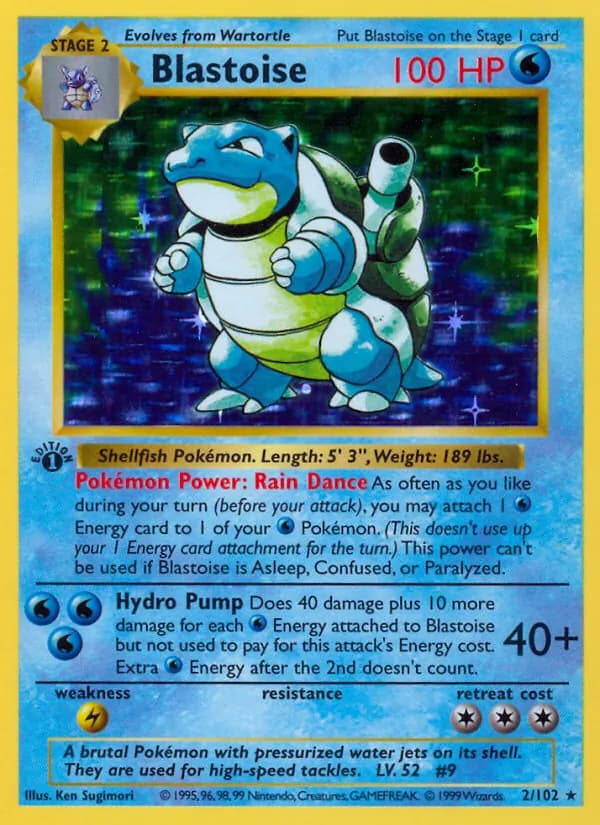
Blastoise 2/102 from the Base Set is worth between €150 and €800 raw according to the Pokechrono catalogue, October 2026, and about €7,700 in PSA 10 according to PriceCharting, up 200% over twelve months: the 10 is worth about 82 times the raw card and 7.8 times a PSA 9.
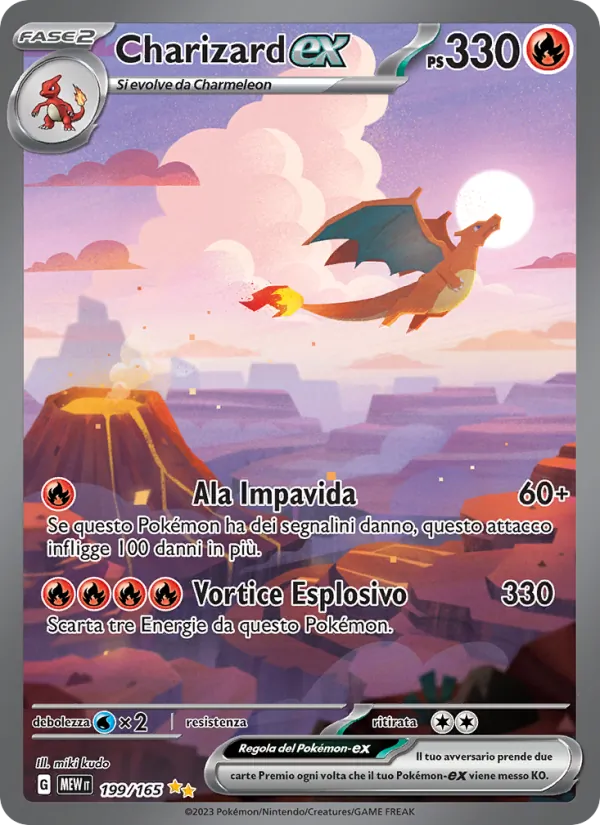
Modern cards are born better: more precise cut, more regular centring, sleeves and toploaders from day one. The 10 is more frequent, and the premium smaller. Charizard ex 199/165 from Pokémon 151 is worth between €320 and €420 raw and about €1,250 in PSA 10, October 2026: the 10 is worth 4.4 times the raw card and 3.9 times a PSA 9. The brake here is print lines and fingerprints on the textures of the Special Illustration Rares.
Pre-grading at home, in four steps
No lab equipment is needed: a ten-power loupe, a desk lamp, a ruler with millimetres and cotton gloves.
- Centring: measure the borders of the illustration on the left and right, then top and bottom, on the front. If one border exceeds one and a half times the other, the card is not a 10. Repeat on the back with the wider tolerance.
- Edges: with raking light, tilted almost parallel to the card, look at the back along the four sides for white.
- Corners: with the loupe, one by one, front and back. Look for the sharp tip and the coloured layer all the way to the end.
- Surface: rotate the card under the raking light, front and back. Scratches, prints and print lines appear and disappear with the angle: if they appear, the company will see them.
Pre-grading does not replace the company's judgement, which uses finer tools and criteria. It serves to discard at home the cards that have no chance and to send for grading only those that do. On Pokechrono the work is already done: every card at auction is a PSA 10 with a verifiable certificate, re-checked by our expert with the same method, described on the how we verify page. If you have a raw card and want an opinion, the photos to send us from the contact page are those of the four steps above.
- centring
- grading
- PSA 10
- pre-grading
- surface
Frequently asked questions
What centring is required for a PSA 10?
According to the standards published by PSA, a Gem Mint 10 requires centring between 55/45 and 60/40 on the front and 75/25 or better on the back. It means one border can be at most one and a half times the other, on the front.
Why do vintage cards get a 10 so rarely?
Because in 1999 and 2000 the factory cut was less precise and many cards came out of the pack already outside tolerance. Add to that twenty years of storage, often without a sleeve. A 10 requires a card born well and never touched.
Can I do a pre-grading at home?
Yes, with a ten-power loupe, a raking light and a ruler. It does not replace the company's judgement, but it lets you discard the cards that have no chance and send for grading only those that do.
Sources
The cards we talk about
Read next
Grading4 min read
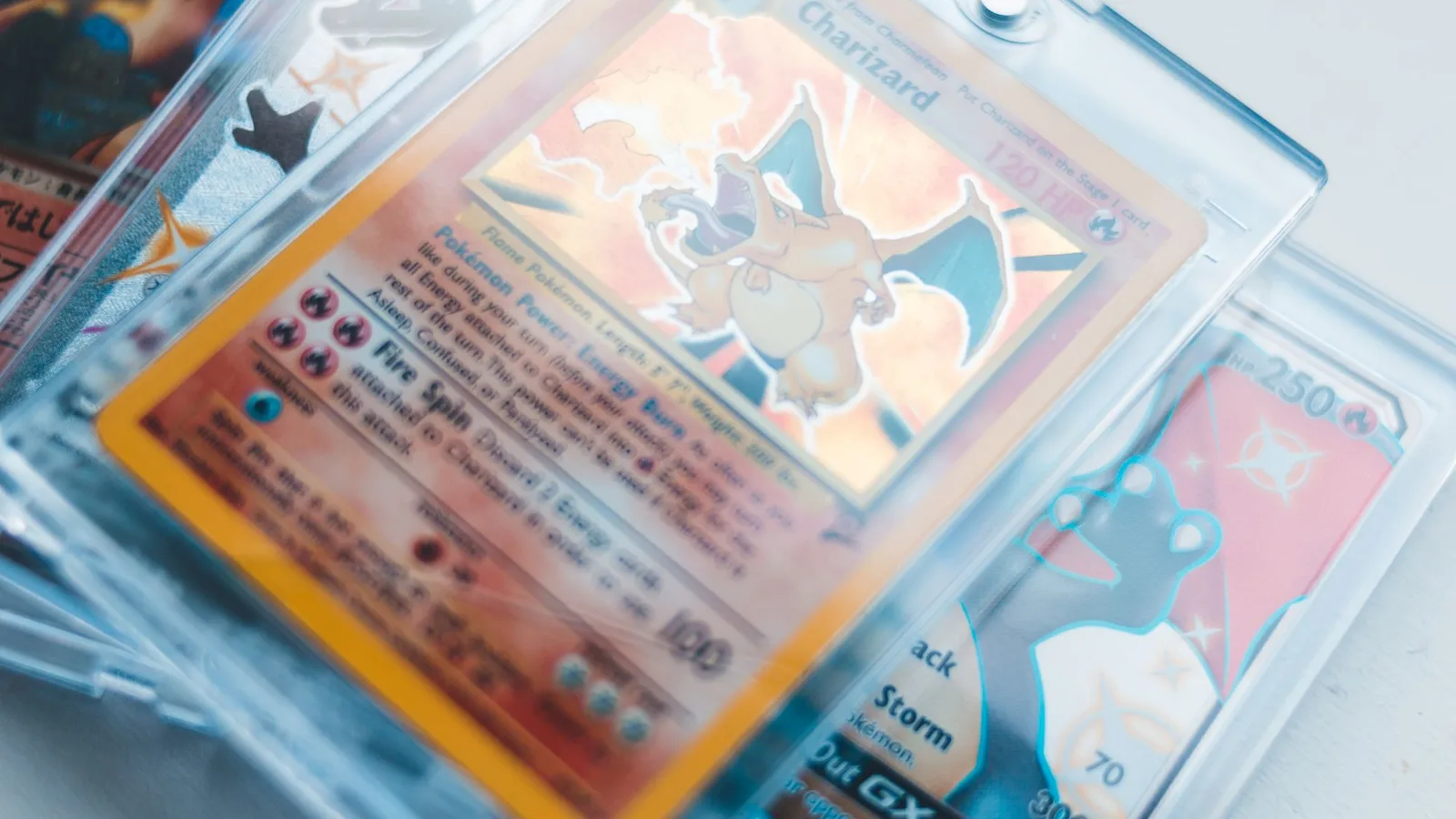
PSA 9 or PSA 10? How much the price changes, card by card
What a PSA 10 is worth against the same card in PSA 9, from the Base Set Charizard to modern alt arts, with the real catalogue ratios for October 2026.
Market4 min read
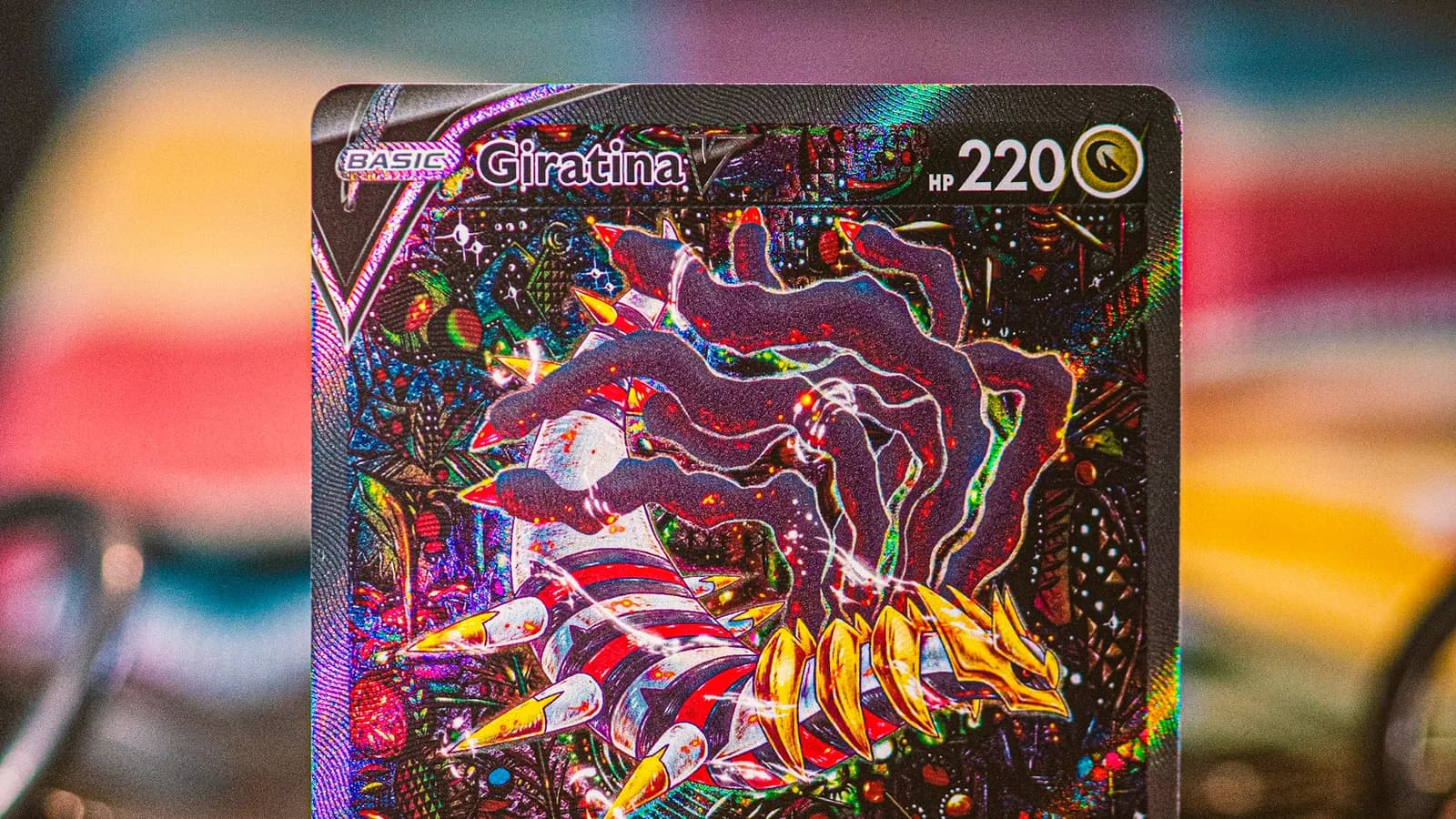
The 10 premium: why a PSA 10 is worth tens of times the raw card
Charizard 40 times, Blastoise 82, Mewtwo 155, Gengar VMAX 2.8: what determines the premium of a PSA 10 over the same card left ungraded.
Guides4 min read
How to read a Pokémon card: number, set symbol, rarity and abbreviations
Number and total, set code, rarity symbols, the ex, V, VMAX, Mega ex, IR, SIR and Hyper Rare abbreviations, plus holo, 1st Edition and shadowless.
Want to know what your card is worth?
The catalogue shows the PSA 10 price and the price range of every card, with sources and dates.