Guides4 min read
How to read a Pokémon card: number, set symbol, rarity and abbreviations
Number and total, set code, rarity symbols, the ex, V, VMAX, Mega ex, IR, SIR and Hyper Rare abbreviations, plus holo, 1st Edition and shadowless.
The Pokechrono editorial teamPublished 7 October 2026
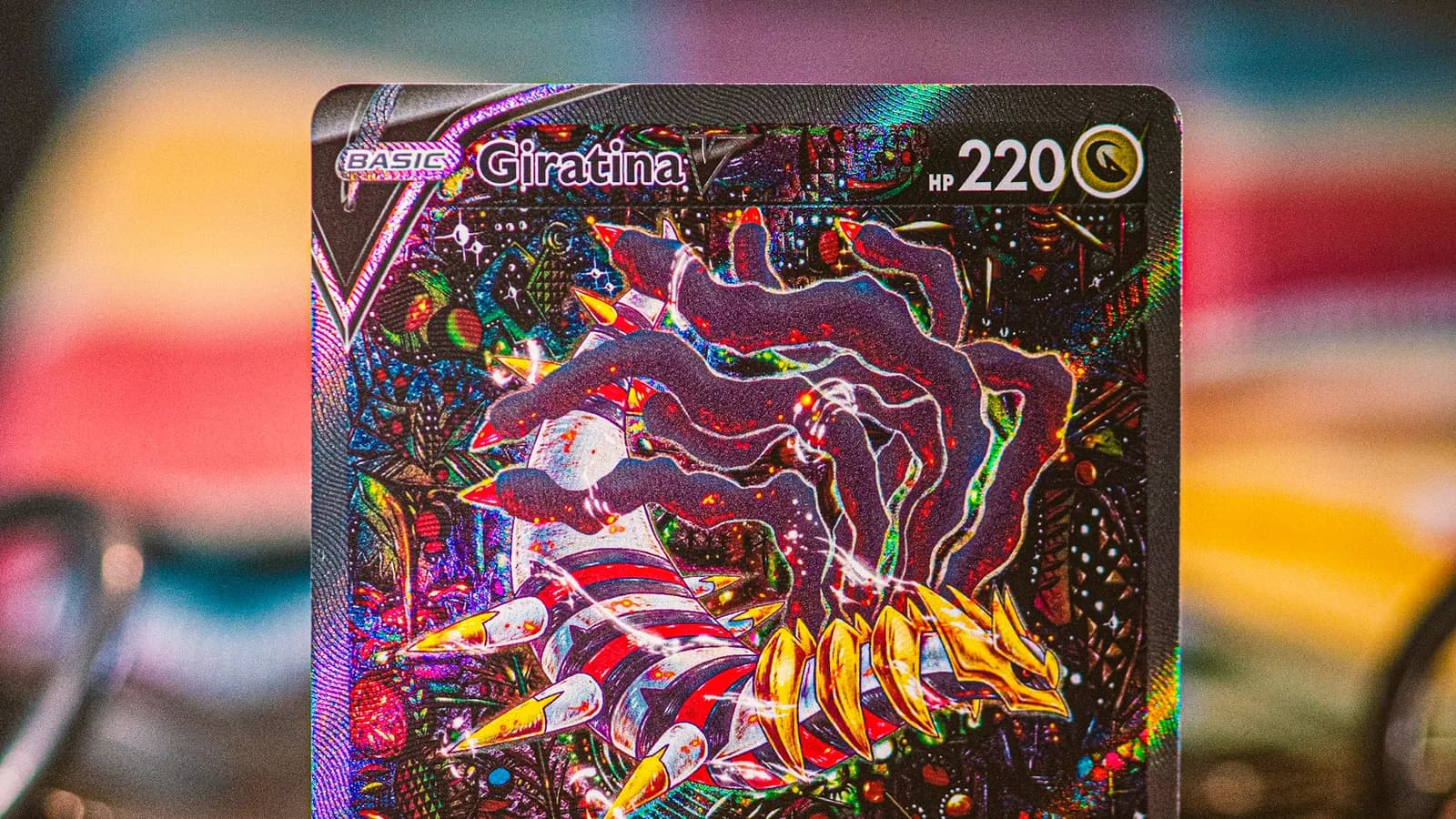
A Pokémon card is read in three places: the number at the bottom, the rarity symbol next to it and the abbreviations in the name. With these three elements you can tell which set it is from, how rare it is and which price band it sits in, before you even look at the illustration. Here is how, with examples from the Pokechrono catalogue.
The number and the total
At the bottom left, or at the right on older cards, there is a fraction: 199/165, 4/102, 161/131. The first number is the card's position in the set, the second the official total. When the first exceeds the second, the card is a secret rare: it does not count towards the total and is printed far less.
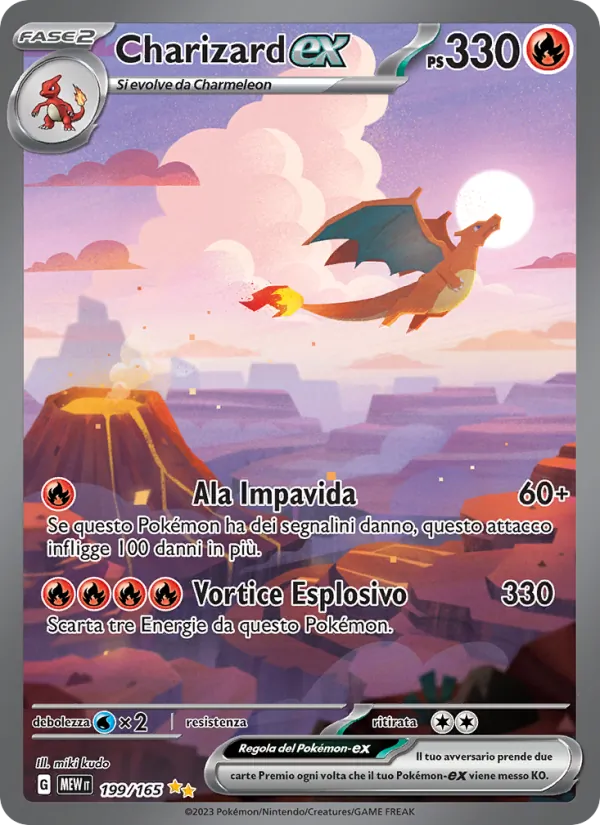
Charizard ex 199/165 from Pokémon 151 is the classic example: the set declares 165, the card is number 199. In PSA 10 it is worth about €1,250 according to PriceCharting, October 2026, against a raw range of €320 to €420. In the 1999 Base Set, by contrast, Charizard is 4/102: within the total, because secret rares did not exist yet.
The set symbol and the set code
Next to the number is the set symbol, a small drawing that identifies the expansion. Since 2023 cards also carry a three-letter code, easier to search for: MEW for Pokémon 151, PAL for Paldea Evolved (Evoluzioni a Paldea), PRE for Prismatic Evolutions (Evoluzioni Prismatiche), 30C for the 30th Anniversary.
The code is useful for not confusing two similar cards. Charizard 4/102 exists in the 1999 Base Set, in the 2021 Celebrations Classic Collection and in the 2026 30th Anniversary reprint: same number, same illustration, three different cards and three different prices. The set symbol, and the year in the copyright line at the bottom, tell you which one you are holding.
The rarity symbols
On the same line as the number is a rarity symbol. On cards from the Scarlet & Violet and Mega Evolution series the scale is this:
- circle: common;
- diamond: uncommon;
- one black star: rare;
- two black stars: double rare, the ordinary Pokémon ex;
- one gold star: Illustration Rare (IR);
- two gold stars: Special Illustration Rare (SIR);
- three gold stars: Hyper Rare, the gold cards.
The full arts of Pokémon ex and Trainers have a symbol of their own, the ultra rare. On vintage cards the scale was shorter: circle, diamond, star, with the holographic background to mark out the holos.
The modern abbreviations: ex, V, VMAX, Mega ex
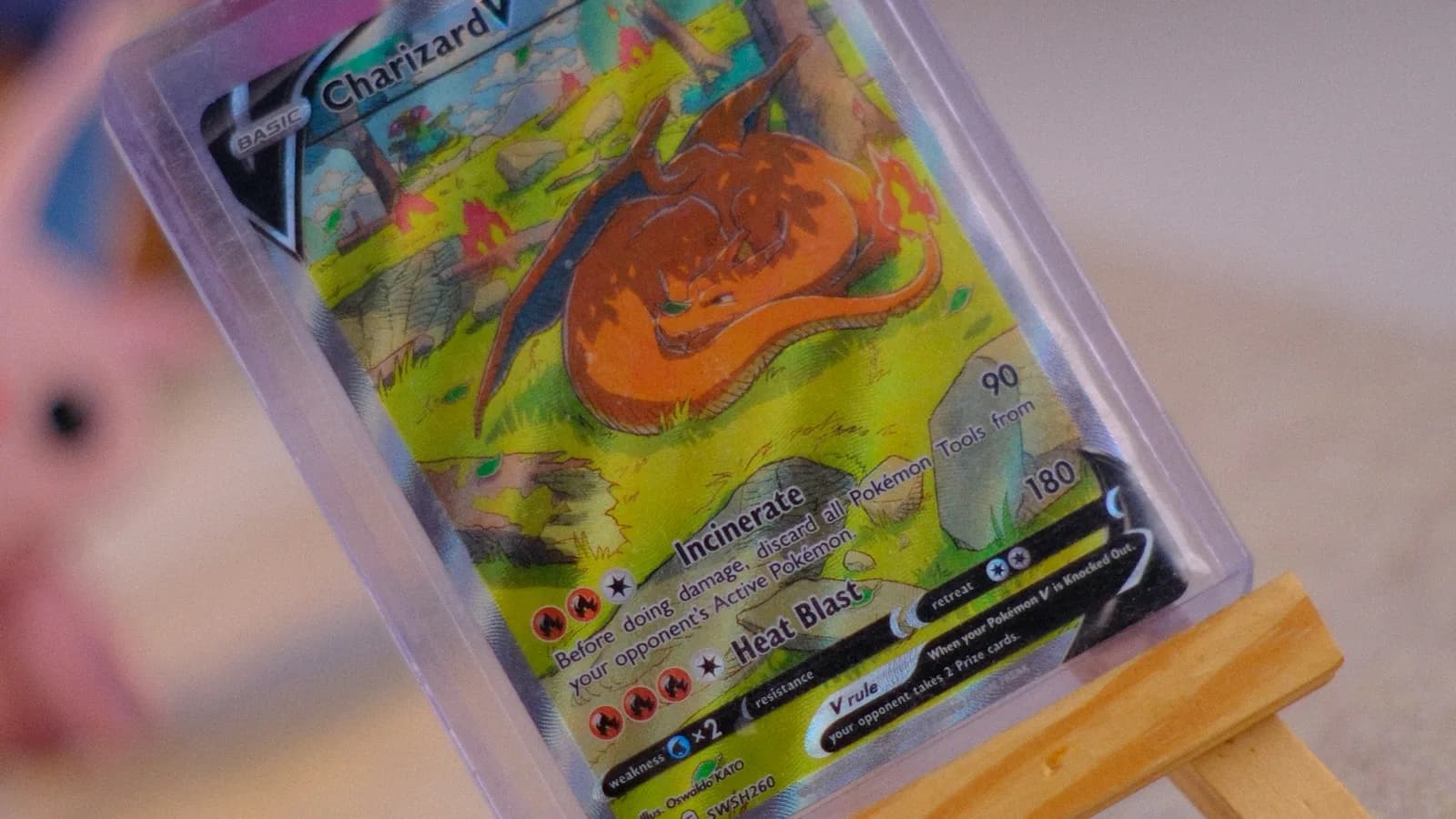
The abbreviations in the name tell you the type of card and the era. V and VMAX belong to the Sword & Shield series, from 2020 to 2022: VMAX cards are huge evolutions of the V cards and gave the market the great alternate arts of 2021. VSTAR cards are the last of that series.
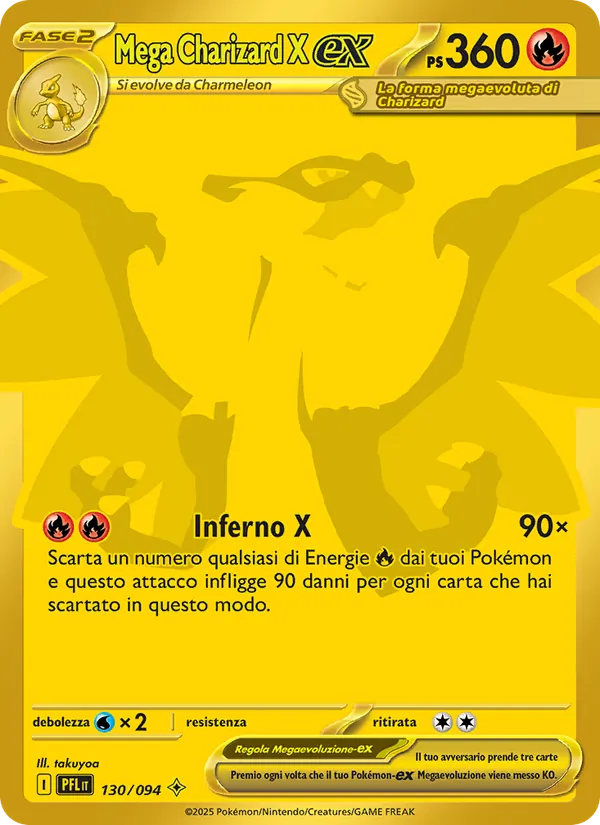
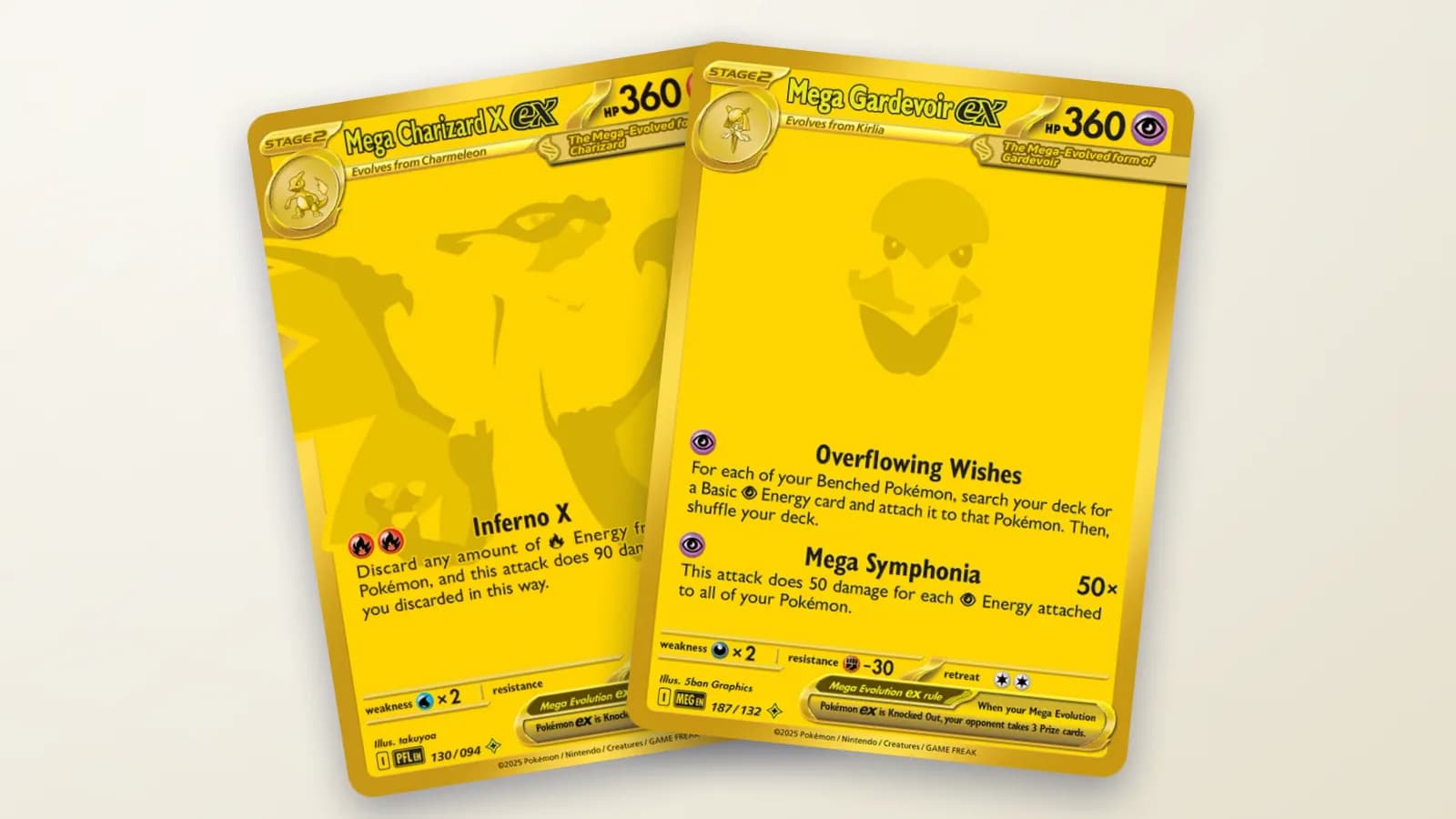
Lower-case ex cards belong to the Scarlet & Violet series, from 2023: powerful Pokémon worth two Prize cards. Mega ex cards arrived in 2025 with the Mega Evolution series. There are also Mega Hyper Rares, the gold version of the Megas: Mega Charizard X ex 130/094 from Phantasmal Flames is at about €1,900 in PSA 10 according to PriceCharting, October 2026, down 43% over twelve months, with a raw range of €240 to €300.
IR, SIR and Hyper Rare: the cards that set the price
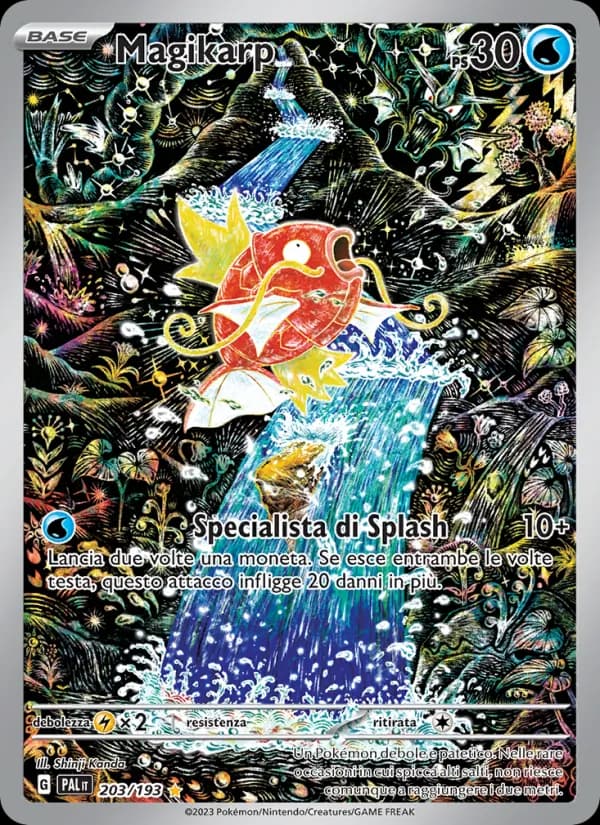
In the Scarlet & Violet series the collector's cards are three. The Illustration Rare (IR) shows a Pokémon without abbreviations in a full-card scene: Magikarp 203/193 from Paldea Evolved is the most famous IR of the period, at about €3,200 in PSA 10 according to PriceCharting, October 2026, up 66% over twelve months, with a raw range of €200 to €250.
The Special Illustration Rare (SIR) does the same with a Pokémon ex or with a Trainer. It is the most sought-after card in almost every recent set, and the most expensive after the alternate arts of 2021.
The Hyper Rare is the gold version of an ex or a Trainer. It is generally worth less than the SIR of the same Pokémon: Pikachu ex 179/131 from Prismatic Evolutions is at about €280 in PSA 10, October 2026, with a raw range of €50 to €80.
Vintage: holo, 1st Edition, shadowless
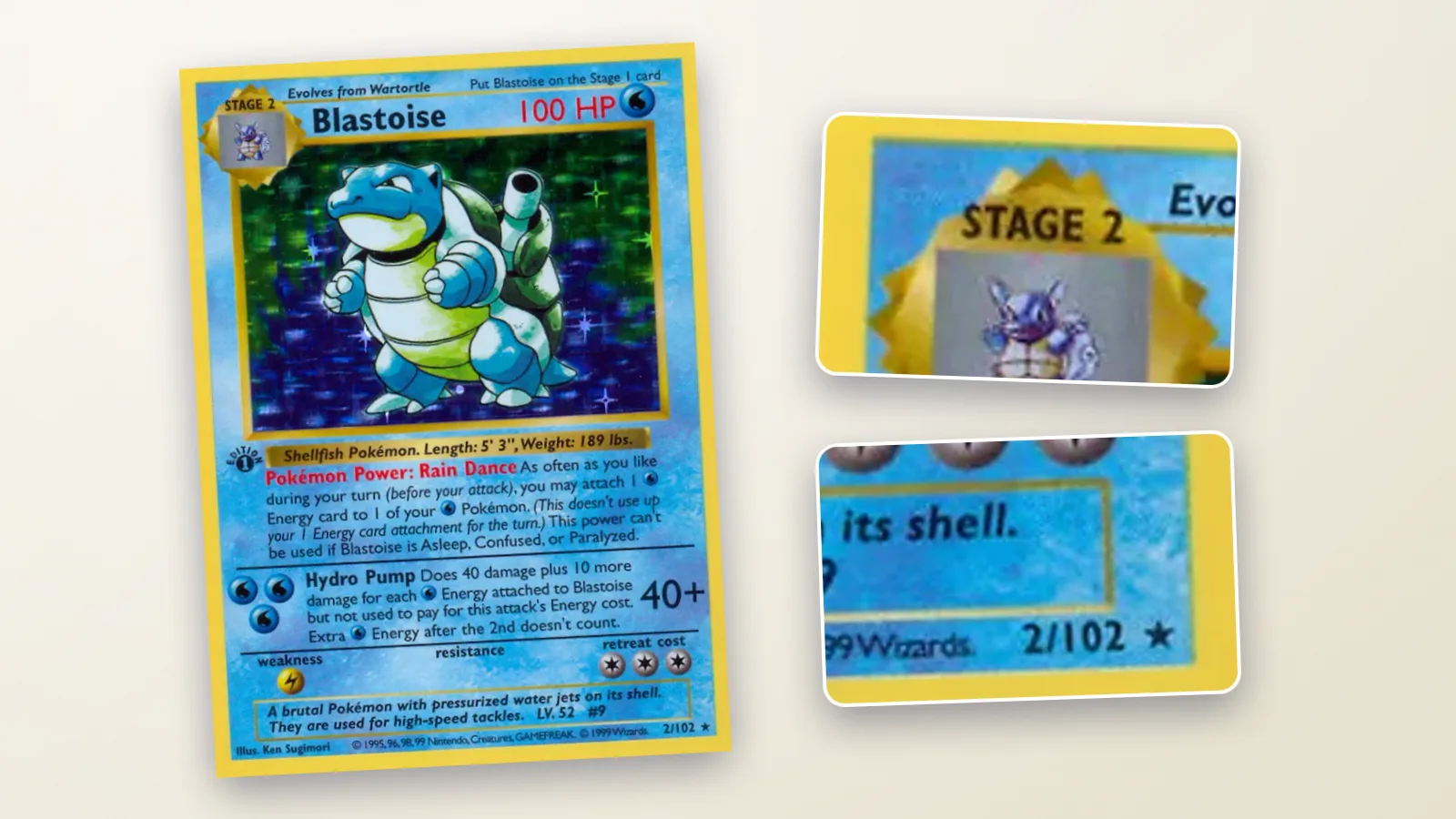
On cards from 1999 and 2000 the abbreviations did not exist. Three things matter. The holo: the illustration has a holographic background, and in the Base Set the holos are the first sixteen cards. The 1st Edition: a stamp with the number 1 in an oval, on the left below the illustration, present only on the first print run. The shadowless: on the unstamped cards of that same first print run the shadow to the right of the illustration box is missing, which the Unlimited print run added.
These three words explain why two Charizard 4/102 that look identical at first glance can be worth wildly different sums. On every listing in the catalogue we state the print of the copy on sale, and if you have a doubt about a card you own you can write to us from the contact page.
- reading a card
- rarity
- SIR
- collection number
- guide
Frequently asked questions
What does a number higher than the total mean, such as 161/131?
That the card is a secret rare: it is not part of the official set count and is found far less often. Special Illustration Rares, Hyper Rares and alternate arts almost always have a number beyond the total.
What is the difference between IR and SIR?
The Illustration Rare (IR) shows an ordinary Pokémon with a full-card illustration and one gold star. The Special Illustration Rare (SIR) does the same with a Pokémon ex or a Trainer, has two gold stars and is rarer. Within the same set the SIR is worth more.
How do I recognise a 1st Edition card?
By the stamp with the number 1 inside a small oval, printed on the left below the illustration on cards from 1999 and 2000. Without the stamp the card is Shadowless or Unlimited, and the two are told apart by the shadow to the right of the illustration box.
Sources
The cards we talk about
- 20ModernSold for €4,050
Magikarp
Evoluzioni a Paldea · Paldea Evolved · 203/193
PSA 10€3,161
Oct 2026▲ 66 %
- 27ModernSold for €1,450
Charizard ex
Pokémon 151 · 151 · 199/165
PSA 10€1,251
Oct 2026▲ 18 %
- 47ModernSold for €2,210
Mega Charizard X ex
Fiamme Spettrali · Phantasmal Flames · 130/094
PSA 10€1,921
Oct 2026▼ 43 %
- 31PSA10ModernAt auction
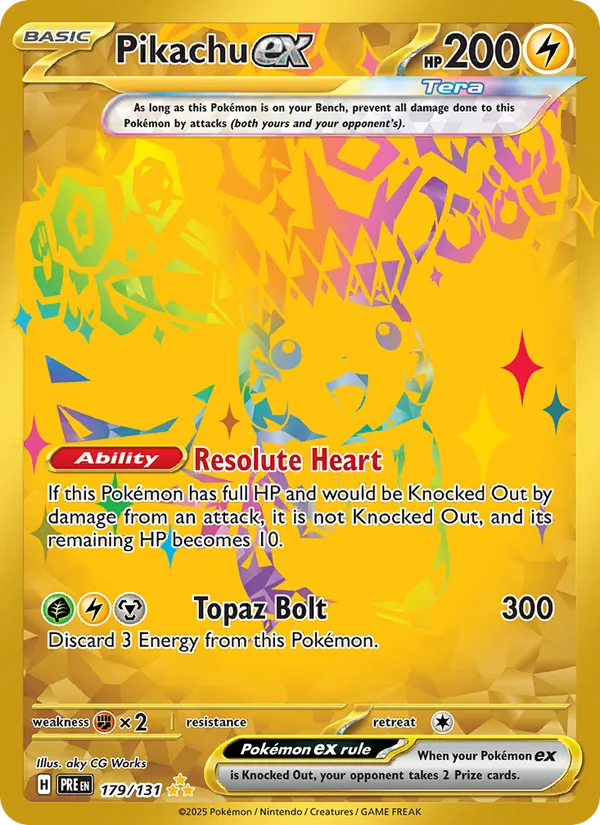
Pikachu ex
Evoluzioni Prismatiche · Prismatic Evolutions · 179/131
PSA 10€275
Oct 2026▼ 27 %
Read next
Releases4 min read
Delta Reign: what to expect from the new Mega Evolution expansion
Delta Reign is released on 6 November 2026, the sixth Mega Evolution expansion: the Mega ex rarities, what to look for in a new set and how prices move.
Grading5 min read
Centring, edges, corners, surface: the four criteria that decide a 10
How a grading company measures centring, edges, corners and surface, why vintage rarely gets a 10, and how to do a pre-grading at home.
Stories4 min read
The illustrators of Pokémon cards: from Arita to the modern alt arts
Mitsuhiro Arita, Ken Sugimori, Atsuko Nishida and the alt art signatures: where the name is on the card and how much it counts in the price, with examples.
Want to know what your card is worth?
The catalogue shows the PSA 10 price and the price range of every card, with sources and dates.