Guides5 min read
How to ship a Pokémon card safely: sleeve, toploader and box
Sleeve, toploader or semi-rigid holder, cardboard backing, padded envelope or box, insurance and tracking. What to do and what to avoid.
The Pokechrono editorial teamPublished 4 November 2026
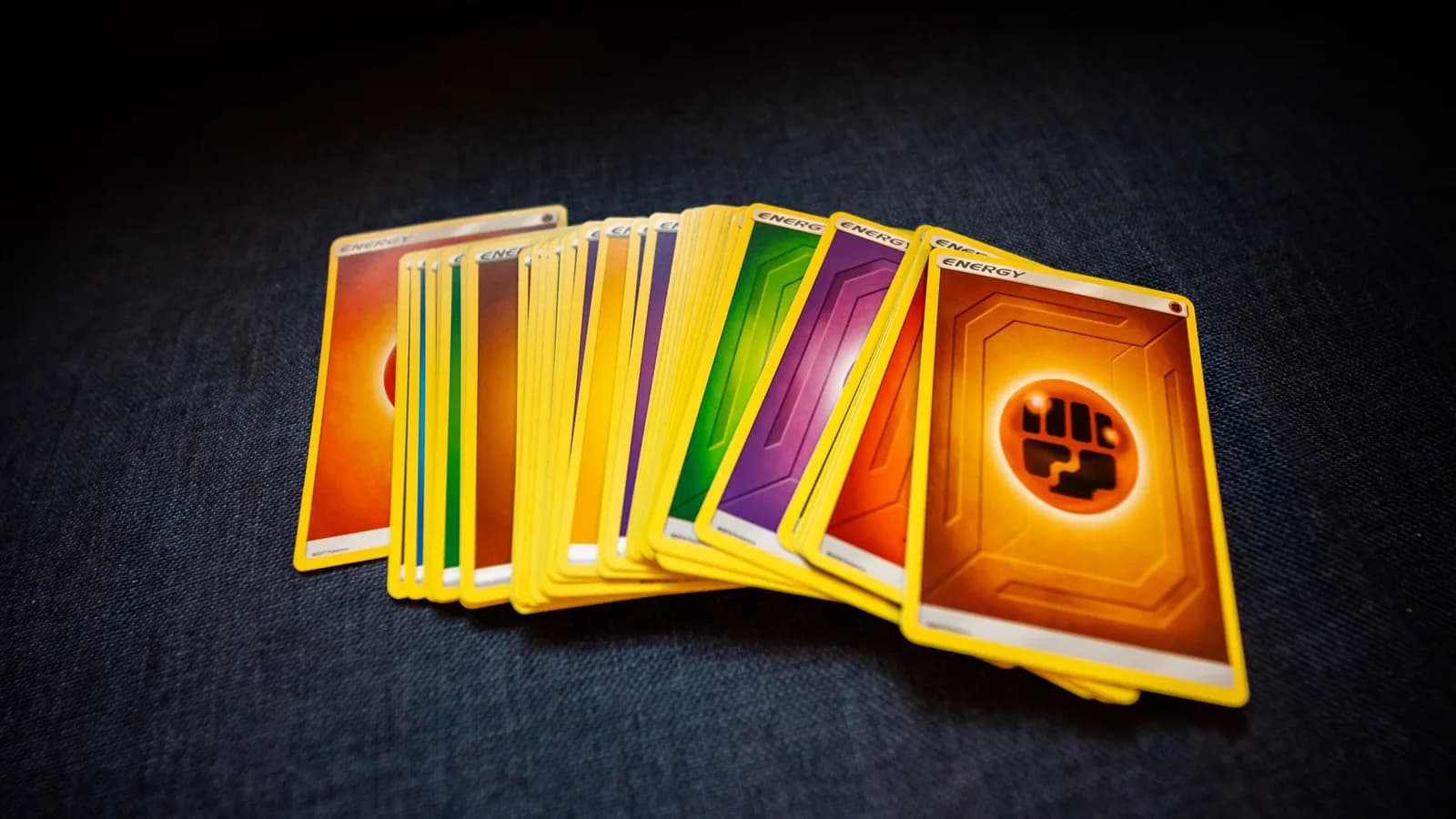
A Pokémon card arrives in one piece if it cannot move, cannot bend and cannot get wet. Everything else, from the sleeve to the box, exists to achieve those three things, and it takes ten minutes to prepare with materials that cost a few euros. Here is the procedure we follow ourselves, and the mistakes we see landing on our expert's desk.
The first layer: sleeve and toploader
The card goes first into a soft sleeve, ideally a "perfect fit", slid in from the bottom. The sleeve stops fingers and hard plastic from rubbing against the holo. The sleeved card then goes into a toploader, the rigid clear pocket, or into a semi-rigid holder, the kind grading companies ask for with submissions because it opens without forcing.
One detail makes all the difference: the toploader must be closed. A small strip of paper tape over the opening, folded back on itself at one end so it peels off without tearing, keeps the card still inside the pocket. The tape touches only the toploader, never the sleeve and never the card.
For a graded card the story changes: the slab is already rigid. It goes into a soft outer case, if you have one, and moves straight on to the second layer.
The second layer: cardboard and envelope or box
A toploader on its own is not enough, because an envelope folded by a courier folds the toploader with it. Add two pieces of rigid cardboard, at least a centimetre larger than the toploader on every side, one above and one below, taped together along the edges. That is the structure that prevents bending.
The choice of container then depends on what is inside.
- One or a few cards in toploaders, of modest value: a padded bubble envelope, with the cardboard packet filling it so nothing can shift.
- Valuable cards, several toploaders together, or any slab: a rigid double-wall cardboard box, with foam, padded paper or bubble wrap on all six sides, so that when you shake the box nothing can be heard moving.
The inner packet goes into a resealable plastic bag before the box is closed. A parcel left out in the rain does happen, and cardboard soaks up water within minutes.
The mistakes we see most often
The cards that reach our expert damaged in transit almost always tell the same story, and it could have been avoided.
Sticky tape on the card or on the sleeve, which tears a corner or leaves residue on the holo when it comes off. The plain paper envelope, with no cardboard, which a sorting roller folds in half together with everything inside. The toploader left open, with the card sliding out and getting ruined on a corner during transport. The oversized box only half filled, where the card bounces off the walls for days.
A less obvious mistake is the envelope with "collectible cards" or "fragile" written prominently on it: it does not earn better handling, and it tells anyone who sees it what is inside. An anonymous, well-packed parcel travels more quietly than one asking for attention.
Insurance and tracking: how much to declare
A valuable card always travels tracked and insured for its real value. The real value is the value on the day of shipping, and for a graded card it is the value of the grade: an Umbreon ex 161/131 from Prismatic Evolutions in PSA 10, according to PriceCharting in October 2026, is worth around €4,600, while the same card ungraded sits between €1,000 and €1,700. Insuring the slab for the raw card's figure means, should the parcel go missing, losing the difference.
Tracking serves both parties: the sender, to prove the parcel has left; the recipient, to know when to expect it. For the most expensive cards, delivery with a signature is worth having, as it avoids the parcel being left on the doorstep.
We do not list courier rates here: they change with weight, destination and declared value, and today's would not be next month's. The comparison is best made on the courier's website, on the day you ship.
How we ship, and what we ask of sellers
Every card sold on Pokechrono leaves from our premises, after the expert has rechecked slab and certificate. It travels in a rigid box with custom-cut foam, tracked and insured for the full value, with a signature on delivery. Shipping is stated on the listing before you bid, and the tracking number arrives by email and in your account. The full journey, from bid to delivery, is on the how it works page.
From anyone who entrusts a card to us we ask the same care, on a smaller scale. The request starts from the sell page, with photos, set, number and estimated condition; the expert replies within two working days, and nothing is shipped before that reply. The card then travels between two pieces of rigid cardboard, in a padded envelope, by tracked courier insured for the full value, and the tracking number is entered in your own account area. On arrival we photograph it the moment the envelope is opened, so the condition on arrival is documented for everyone.
On arrival: what to check and what to photograph
The recipient has a short but important job: photograph the closed parcel, from every side, before opening it. If the cardboard is crushed or wet, those photos are the basis of any insurance claim. Then open it calmly, with no blade near the contents, and photograph the contents too, just as they are.
On a graded card, three things are checked: the seal of the case, the plastic free of cracks, and the match between label, certificate and card. They are the same checks we carry out on every slab before the auction, described on the how we verify page. On a raw card, look at corners and edges under a raking light, and at the holo surface for any scratches.
For a purchase on Pokechrono, the window for reporting a problem is 48 hours from delivery, and delivery arrives between ten and fourteen days after payment. If something is not right, the photos of the parcel and of the contents should be attached to the message from the contact page, and we take it up with the courier ourselves. If everything is in order, the card goes into its box, upright and away from the sun.
- shipping
- toploader
- insurance
- packaging
- selling
Frequently asked questions
Is a toploader enough to ship a card?
No. A toploader protects against bending, not against knocks and not against damp. It needs closing with a piece of tape on the toploader, never on the sleeve or the card, then goes between two pieces of rigid cardboard and into a padded envelope or a box.
How much should I insure a card for?
For the card's real value on the day it ships, not the price you paid years ago. Insurance below the value pays out only the declared sum, and for a graded card the right figure is the value of the grade, not that of the raw card.
How do you ship a PSA slab?
In a soft outer case, inside a rigid box, with foam or padded paper on every side so it cannot move. Never in a plain paper envelope: the plastic cracks with a knock and the grade is no longer guaranteed.
Sources
Read next
Guides4 min read
How to buy your first graded Pokémon card without making mistakes
Choosing the card, reading the label, verifying the certificate, checking the slab, deciding between auction and fixed price. A guide for beginners.
Guides4 min read
How to read a Pokémon card: number, set symbol, rarity and abbreviations
Number and total, set code, rarity symbols, the ex, V, VMAX, Mega ex, IR, SIR and Hyper Rare abbreviations, plus holo, 1st Edition and shadowless.
Guides4 min read
How to store Pokémon cards: sleeves, toploaders, binders and slabs
The four levels of protection, the mistakes that ruin a card, how to keep slabs and sealed products, and how to transport a collection.
Want to know what your card is worth?
The catalogue shows the PSA 10 price and the price range of every card, with sources and dates.