Guides4 min read
How to store Pokémon cards: sleeves, toploaders, binders and slabs
The four levels of protection, the mistakes that ruin a card, how to keep slabs and sealed products, and how to transport a collection.
The Pokechrono editorial teamPublished 6 October 2026
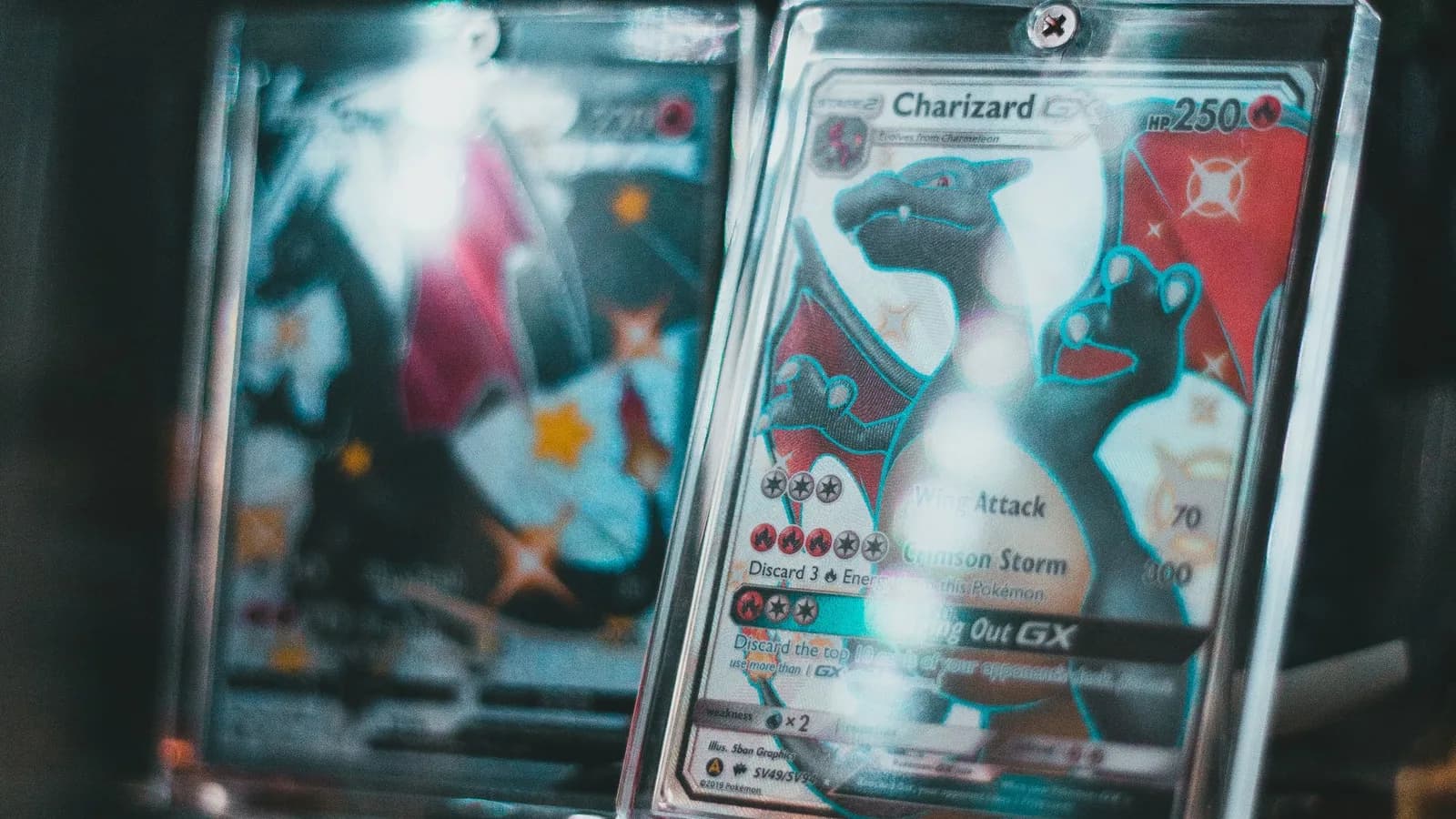
A Pokémon card is ruined more often at home than in transit: sun, humidity, a rubber band, a badly closed binder. Protecting it costs little and follows four levels, from the sleeve to the slab, chosen according to the value of the card. Here is how to use them, and the mistakes we see most often on the cards that reach our expert.
The four levels of protection
The sleeve is the first level: a soft film that protects against dust, fingerprints and rubbing. Gaming sleeves are fine for playing; for storage the "perfect fit" sleeve is better, tighter, slipped on from the bottom so that the opening stays protected by the second level.
The toploader is a rigid pocket of clear plastic. With the card already sleeved, it protects against bends and knocks. It is the minimum for any card worth more than a few tens of euros, and for shipping.
The binder serves the collection as a whole: sleeved cards, one per pocket, that can be looked at without being touched. The quality of the pages matters, and we come to that shortly.
The slab is the rigid sealed case of a grading company. It protects the card and certifies its authenticity and grade. It is the right level for valuable cards, and the only one we sell on Pokechrono, in PSA 10.
The mistakes that ruin a card
Almost all the damage we see has the same causes.
- The sun: direct light fades the colours and yellows the border within a few months. This applies to framed cards on the wall too.
- Humidity: cards absorb water, warp and the holo surface lifts. Cellars and attics are the worst places.
- Rubber bands: they mark the edge and, over time, stick to the cardstock.
- Bare cards in a ring binder: the rings and the weight of the pages leave marks on the first column.
- Hands: the grease of the fingers leaves prints on the holo that never come off. For valuable cards we use cotton gloves.
A card that has suffered one of these does not go back, and a grading company always sees it. Prevention is the only cure.
What to use for valuable cards
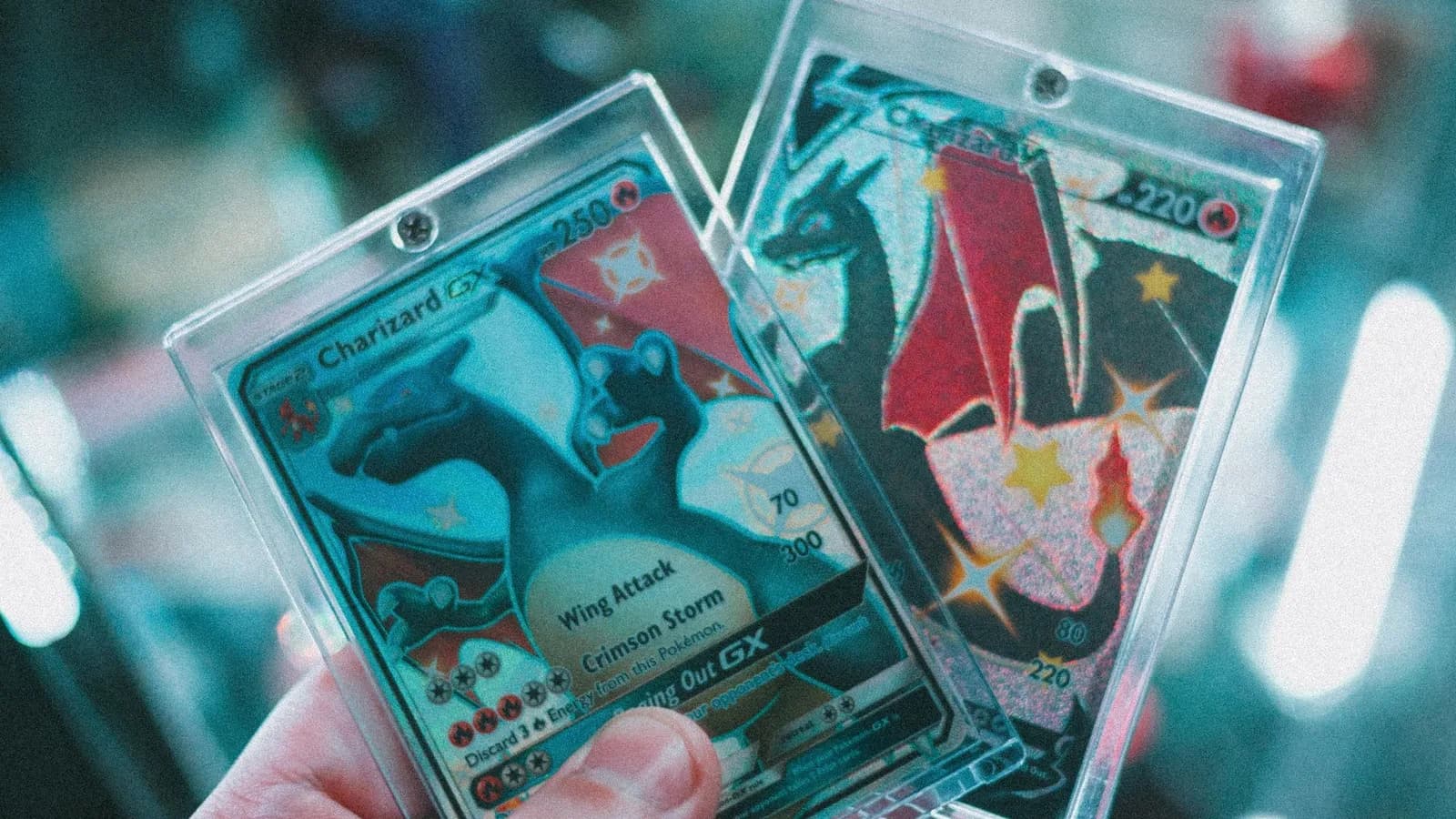
For a card worth a hundred euros or more: perfect fit sleeve, toploader, and the toploader in a rigid box, upright, away from the light. Those who want extra protection use two-piece acrylic cases with magnetic closure, nicer for display, with the same rule: never in the sun.
For a card worth several hundred euros, grading is the sensible choice. The sealed slab removes any doubt about authenticity, fixes the grade and is verified online with the certificate number. On the how we verify page we explain what we check on every slab before putting it up for auction.
Storing slabs
The slab protects the card, but it needs protecting in turn. Three rules. Upright, in a box with dividers, because stacked they scratch and the weight can crack the plastic. Away from the sun, because the case does not filter out every ray and the card fades anyway. In a soft outer case, if you handle them often: surface scratches polish out, cracks do not.
A scratch on the case does not affect the grade. A crack or an opened seal does: the grade is no longer guaranteed, because the card may have been swapped. That is why we photograph every slab before shipping it and pack it in a rigid box with custom-cut foam.
Binders and sealed products
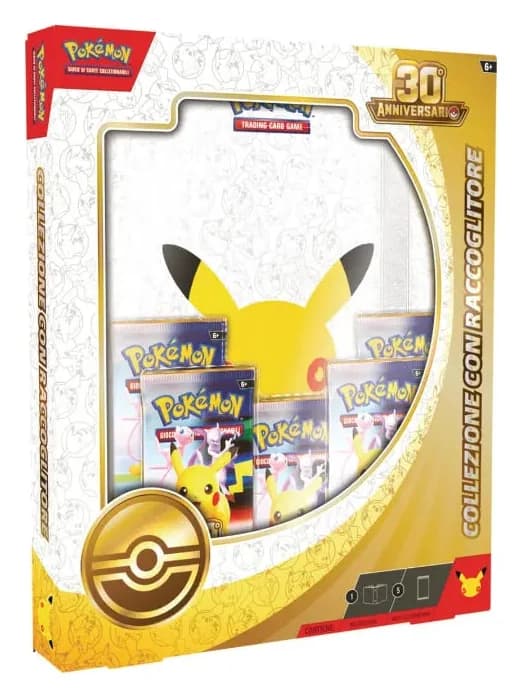
A good binder has a fixed spine, no rings, and side-loading pages: the card goes in from the side, not from the top, and does not slide out if the binder falls. The 30th Anniversary Binder Collection, in the shop at €84.90 and released on 16 September 2026, is an example of this format: a binder with side-loading pages, in a package that usually also includes some booster packs from the set, with the official details on the product page.
Sealed products follow rules similar to cards: away from the light, which fades the box and lowers the value, and never stacked in tall columns, because the corners get crushed. An Elite Trainer Box is kept upright, on a shelf, like a book.
Transporting a collection
For a short trip, sleeved cards in toploaders go in a rigid box, with a divider every few pieces so they do not move. Slabs travel upright, separated from each other by a sheet of foam or a soft case.
For shipping there is one rule: the card must not be able to move inside the parcel. Rigid box, foam or padded paper on every side, and insurance for the real value. It is the way we ship, and it is what we ask of anyone who consigns a card to us for verification, with a prepaid, insured label that we provide.
- storage
- sleeves
- toploader
- slab
- binder
Frequently asked questions
Is a sleeve enough to protect a valuable card?
No. A sleeve protects against dust and fingerprints, not against bends and knocks. A valuable card needs at least a sleeve plus a toploader, and the most expensive cards a slab sealed by a grading company.
Can I keep cards in a ring binder?
Only with side-loading pages and cards already sleeved. The metal rings, if the binder closes badly or falls, mark the cards in the first column. A fixed-spine binder with side-loading pages is better.
How should slabs be stored?
Upright, in a rigid box with dividers, away from the sun. Never stacked on top of each other: the plastic scratches and, under the weight, can crack. Soft outer plastic cases help.
Products mentioned
Read next
Releases4 min read
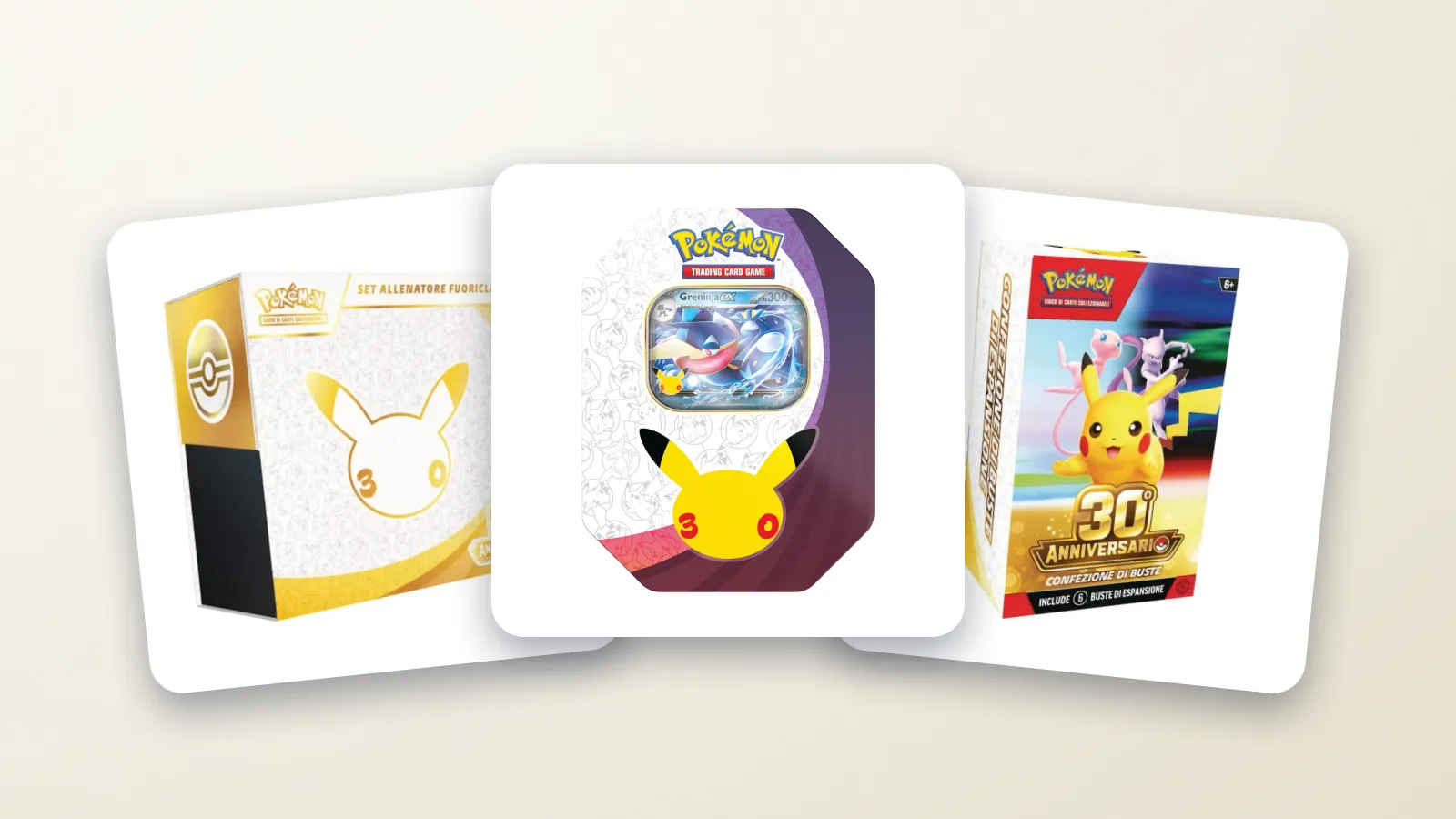
Pokémon 30th Celebration: the complete guide to the product line
Every 30th Celebration product from 16 September 2026: ETB, Collections, Tins, Mini Tin, booster packs and the Classic Collection reprints, with prices.
Guides4 min read
How to buy your first graded Pokémon card without making mistakes
Choosing the card, reading the label, verifying the certificate, checking the slab, deciding between auction and fixed price. A guide for beginners.
Guides4 min read
How to read a Pokémon card: number, set symbol, rarity and abbreviations
Number and total, set code, rarity symbols, the ex, V, VMAX, Mega ex, IR, SIR and Hyper Rare abbreviations, plus holo, 1st Edition and shadowless.
Want to know what your card is worth?
The catalogue shows the PSA 10 price and the price range of every card, with sources and dates.